Immunotherapy is reshaping cancer care by helping the immune system recognize and attack tumors, with impressive results in some cases. However, not all patients benefit equally; many still experience limited or no response due to both tumor intrinsic factors and external influences. Ongoing research into these mechanisms may help pave the way toward more effective and tailored treatments across a range of cancer types.
Decades of research on the immune system’s vital role in controlling tumor growth has inspired scientists to develop immunotherapy, a strategy that boosts the body’s natural defenses to detect and destroy cancer cells. Unlike chemotherapy or radiation, which attack tumors directly, immunotherapy empowers the immune system to recognize cancer as a threat and mount an effective response.
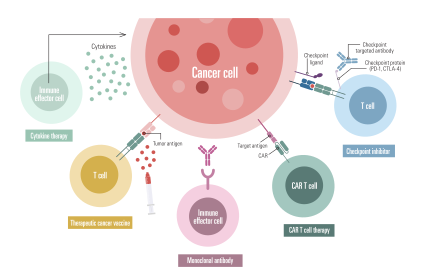
Several immunotherapeutic approaches are now used in the clinic. Some work by activating T cells. Therapeutic cancer vaccines, for instance, train the immune system to recognize and attack cancer cells by exposing it to tumor-associated antigens combined with immune-boosting adjuvants (1). Antigen-presenting cells process these antigens, ultimately priming antigen-specific T cells that travel to the tumor site and destroy cancer cells. Immune checkpoint inhibitors (ICIs) take another approach. By blocking immune checkpoints, such as programmed cell death protein 1 (PD-1) and cytotoxic T-lymphocyte-associated protein 4 (CTLA-4) — which downregulate immune activity but are often exploited by cancer cells to evade detection — ICIs lift these immune ‘brakes’, unleashing T cells and reinvigorating antitumor responses (2). In a more personalized strategy, chimeric antigen receptor (CAR) T cell therapy involves genetically engineering a patient’s or donor’s T cells to recognize cancer cells, then reinfusing them to seek and destroy tumor cells (3).
Other therapies include cytokine-based immunotherapy, which uses signaling proteins to stimulate immune cells, improve antigen priming, limit tumour growth through antiproliferative or proapoptotic activity, as well as boost immune cell cytotoxic activity in the tumor microenvironment (TME) (4). Additionally, injecting monoclonal antibodies has proven to be a powerful approach for treating cancers such as breast, colon, and lymphoma by blocking tumor growth signals and flagging cancer cells for immune attack (5).
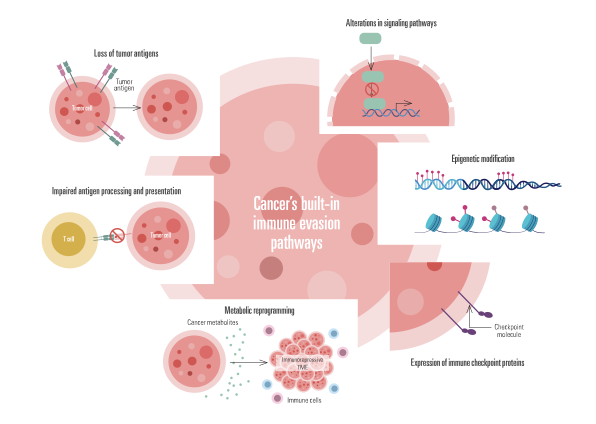
The success of immunotherapy relies in part on the immune system’s ability to recognize and target tumor cells. However, changes within cancer cells may allow them to evade detection or destruction. One of their key strategies is evading antigen recognition. Some cancer cells stop expressing the antigens that immune cells recognize, rendering themselves invisible to T cells. Others develop defects in antigen processing and presenting machinery — such as abnormalities in proteasomes or protein-trafficking channels — that can prevent proper antigen display on the cell surface, leading to disruption of T cell recognition (3). Epigenetic modifications like DNA methylation or histone changes can also silence immune-related genes, including those involved in cell-mediated immunity and antigen presentation, thereby promoting immune evasion (2).
Some tumors may upregulate immune checkpoint molecules such as programmed death-ligand 1 (PD-L1) to suppress T cell activity. This can occur through genomic mutations, epigenetic alterations, or post-transcriptional regulation. Notably, it’s not just cancer cells — various host cells within the TME and lymph nodes, including dendritic cells, macrophages, and T cells, can also express checkpoint molecules, further dampening antitumor immunity (6).
In addition, genetic mutations in tumor signaling pathways that regulate cell growth, differentiation, survival, and immune interactions can disrupt immune responses that ultimately may result in increasing PD-L1 expression or attracting immunosuppressive cells, allowing tumors to evade immune attack and resist immunotherapy (3).
Moreover, tumors may also rewire their metabolism to create an immunosuppressive TME. For instance, cancer cells may secrete metabolites such as adenosine, kynurenine, and oxidized cholesterol derivatives that inhibit dendritic cells and cytotoxic T lymphocytes. Combined with hypoxia, acidity, and lactic acid buildup in the TME, these metabolic changes further impair immune cell function and infiltration, contributing to immunotherapy resistance (3).
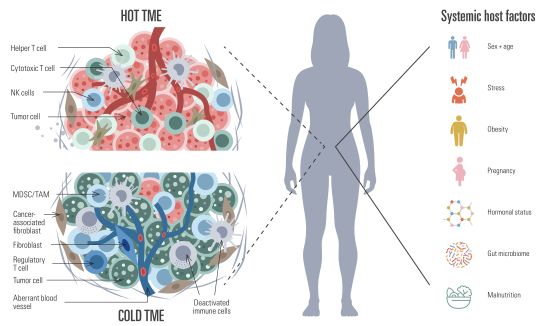
What lies outside the tumor matters, too. Extrinsic resistance factors, such as components of the TME and broader host biology, can significantly limit the effectiveness of immunotherapy. The TME comprises not only cancerous cells but also host-derived components such as immune cells, stromal cells, blood vessels, and the extracellular matrix (ECM). The composition and interactions among these elements can foster a “hot” or “cold” TME, enhancing or reducing antitumor immune responses and therapeutic sensitivity.
Hot tumors feature high infiltration of cytotoxic T lymphocytes, helper T cells, and natural killer (NK) cells, alongside elevated levels of proinflammatory cytokines. They often exhibit normalized vasculature, reduced ECM, and nutrient depletion, collectively contributing to improved responses to immunotherapy (7). In contrast, cold tumors are typically less responsive due to a lack of effector immune cells or immune exclusion, where immune cells are unable to penetrate the tumor core. These tumors are often dominated by immunosuppressive elements such as tumor-associated macrophages (TAMs), myeloid-derived suppressor cells (MDSCs), and regulatory T cells. Dense ECM, abnormal blood vessel growth, hypoxia, and nutrient deprivation further reinforce their immunosuppressive nature, making cold TMEs less responsive to treatment (7).
Beyond the TME, sex-related differences appear to influence responses to immunotherapy, likely due to the interplay between sex hormone signaling, genetic background, and environmental factors (8). Among these factors, sex hormones play a central role: estrogens enhance immunoglobulin production and promote regulatory T cell activity, whereas androgens tend to suppress immune function. Age also plays a role, with older adults often responding better to immunotherapy than younger patients, though the reasons are not yet fully understood (3).
Obesity is generally linked with poorer outcomes, possibly due to immune suppression and limited infiltration of tumor-fighting cells (3). The gut microbiome and the diet also shape antitumor immunity. Certain bacterial species can enhance immune responses, and a high-fiber diet has been linked to improved outcomes, while malnutrition may impair immune surveillance (2,3).
Physiological states such as pregnancy can further impact efficacy. During pregnancy, shifts in the immune system, particularly an increase in regulatory T cells, may suppress antitumor responses. Similarly, psychological stress may trigger the release of hormones like cortisol and epinephrine, which can suppress immune function (3).
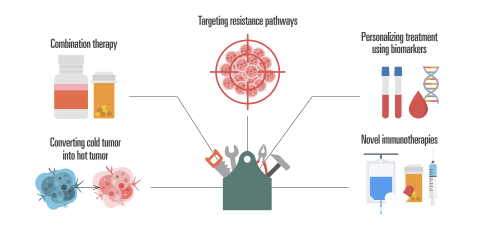
Researchers are expanding immunotherapy by addressing both intrinsic and extrinsic tumor resistance. One promising strategy targets the pathways that tumors exploit to evade immune attacks. By using molecules that regulate altered signaling pathways involved in tumor immunology, it is possible to increase the release of tumor antigens, enhance T cell-mediated antitumor responses, reduce immune checkpoint expression, and collectively overcome resistance to immunotherapy (9).
Combination therapies — pairing immunotherapy with chemotherapy, radiation, or other treatments — are gaining traction. By attacking cancer on multiple fronts, these combinations increase the likelihood of immune activation and reduce the risk of resistance. For example, combining immunotherapy with radiation therapy can enhance tumor antigen release and stimulate immune-cell infiltration (3).
Converting “cold” tumors into “hot” tumors is another key strategy. This involves inhibiting immune checkpoints, targeting the major immunosuppressive cells in the TME, and modulating tumor metabolism. Other approaches include eradicating cancer-associated fibroblasts, reducing ECM density and rigidity, and implementing microbiome interventions (7).
Personalized treatment is also advancing through biomarkers such as PD-L1 expression, tumor mutational burden — the number of mutations in a tumor — and microsatellite instability — which reflects defects in the DNA repair pathway (10). More sophisticated models now integrate multiple parameters, as well as longitudinal sampling during treatment, to identify more predictive biomarkers specific to each patient (11).
Novel immunotherapies further expand the treatment arsenal. Researchers are developing new checkpoint inhibitors, innovative methods to modify immune cells for increased efficiency, new cancer vaccines, and bispecific T-cell engagers, which bring T cells and cancer cells together. Additionally, some therapies aim to use tumor-infiltrating lymphocytes extracted from the patient, expanded in the laboratory, and then returned to the patient’s body to better fight cancer (10). Through these interconnected strategies, the goal is not only to increase the proportion of patients who respond, but also to achieve deeper, longer-lasting remissions across diverse cancer types.