The human papillomavirus (HPV) vaccine is one of two preventive cancer vaccines approved by the United States Food and Drug Administration (FDA). In the 1930s, HPV wasn’t on the radar for most scientists. The virus caused unsightly warts in animals but was never observed in humans. Four decades passed before anyone connected HPV with cervical, penile, or anal cancer, and it took even longer before scientists developed a prophylactic vaccine.
download pdf

In the early 1960s, many scholars viewed cervical cancer as a sexually transmitted disease associated with promiscuity. One study reported that cervical cancer was rare “in virgins and nuns” and another study linked a higher likelihood of cervical cancer “with first coitus on the ground than with first coitus in a hotel or motel” (1,2).
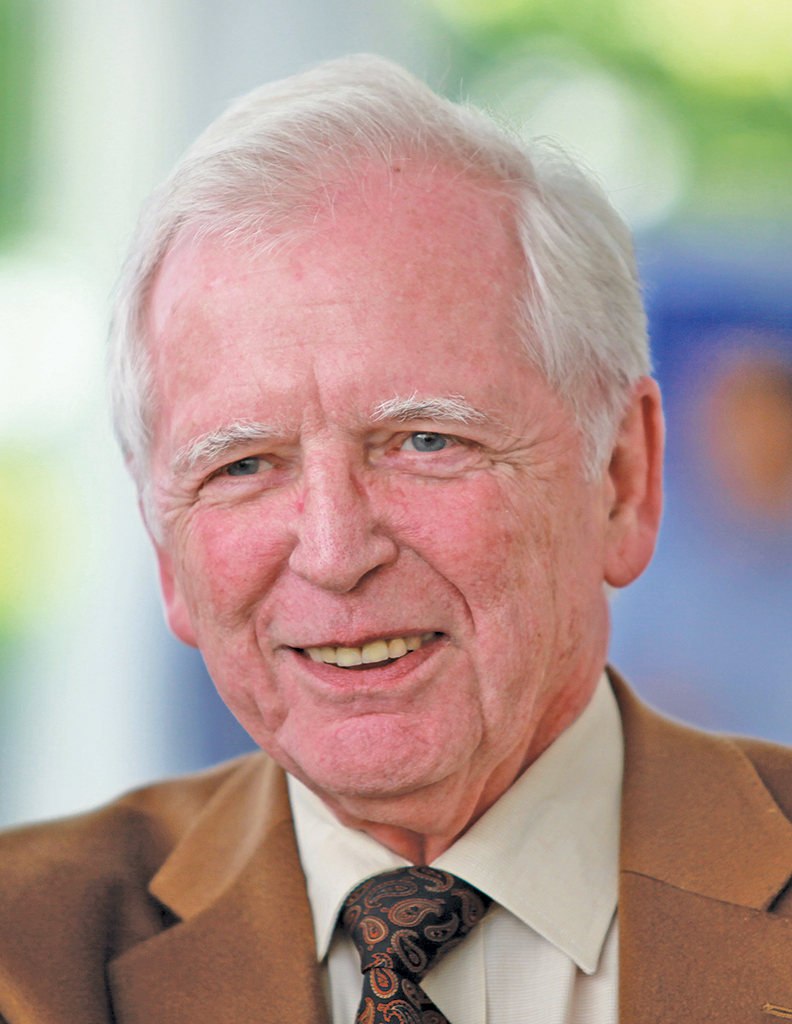
In the 1960s, scientists suspected the herpes simplex virus 2 (HSV-2), a sexually transmitted virus that produces painful sores, as the cause of cervical cancer. But when Harald zur Hausen, a virologist at the German Cancer Research Institute, failed to detect HSV-2 in cervical cancer lesions, an idea struck him (3).
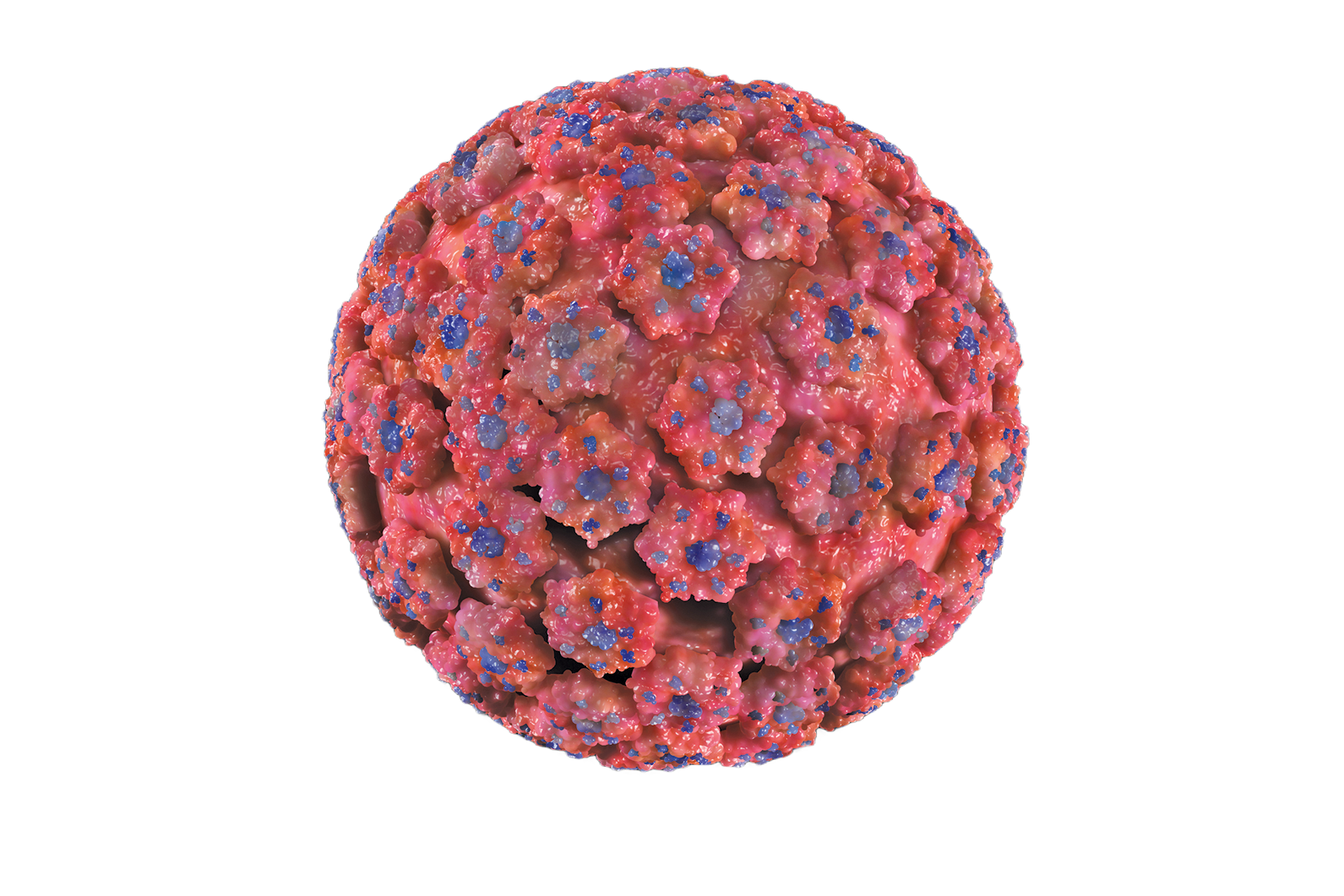
Hausen had a history of connecting infectious viruses with human diseases. His previous studies implicated the Epstein-Barr virus in Burkitt’s lymphoma and linked adenovirus type 12 with chromosome damage in human embryonic kidney cells. Hausen knew that papillomaviruses, small nonenveloped DNA viruses, caused genital warts that led to cancer in animals and suspected that a human version of the virus might do the same (3).
In 1976, he published his hypothesis that human papillomaviruses caused cervical cancer, and in 1983 he confirmed his suspicions (4,5). His team cloned the HPV genome and used this sequence as a probe to locate HPV in cervical cancer tissue samples. In 1985, his team found that two oncogenes, E6 and E7, in HPV were retained and expressed in cervical cancer cells, unequivocally implicating HPV in cervical cancer pathogenesis (6).
Hausen’s findings inspired researchers working on animal papillomaviruses across the globe. “That was a real breakthrough and really changed the emphasis of what we wanted to work on with papillomaviruses,” said Richard Schlegel, a cell biologist at Georgetown University.
Hausen recognized the potential for creating an HPV vaccine to prevent cervical cancer but was turned down by biopharmaceutical companies because they reasoned that there was no market for such a vaccine (3). At that time, there were still a lot of unknowns about HPV, and researchers did not have a system for propagating the virus.
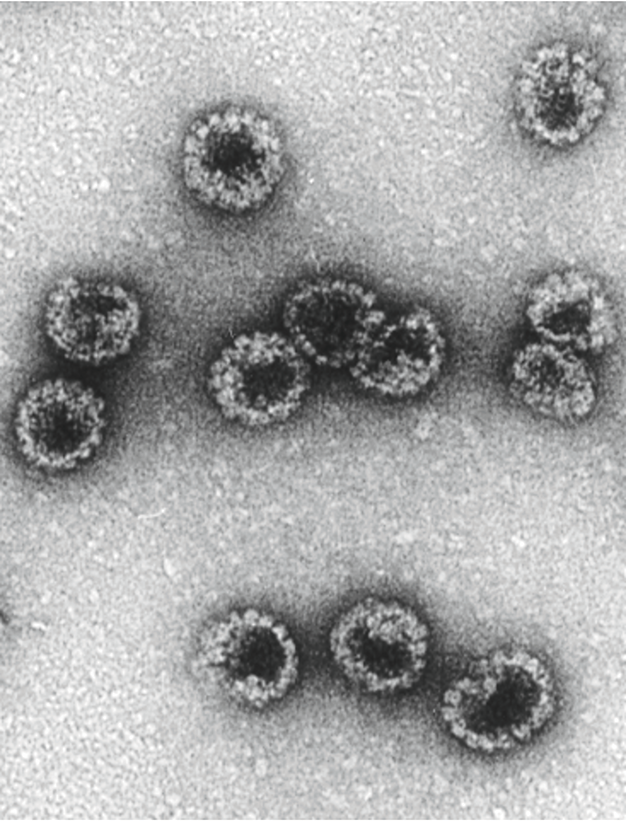
Clinician scientist, Ian Frazer and virologist, Jian Zhou, at Queensland University joined forces to interrogate HPV biology by creating an intact version of the virus (2). They started by trying to build the virus’s outer shell. To accomplish this, they used monkey kidney cells to express HPV’s two key capsid proteins, L1 and L2, and discovered in 1991 that the two proteins self-assembled into virus-like structures, later known as virus-like particles (VLP) (7).
Other research teams had noted the intrinsic ability of some viral capsid proteins to self assemble into particles and typically used these structures to study virology, but Frazer and Zhou recognized the potential of using HPV VLP in a vaccine. However, their HPV VLP faced a key problem; they could not elicit functional antibodies.
In the late 1980s, Schlegel was investigating bovine papillomavirus at the National Cancer Institute (NCI) when one of his students requested a co-mentorship with Bennett Jenson, an immunologist at Georgetown University who had been generating monoclonal and polyclonal antibodies to recognize specific conformational or nonconformational epitopes of the HPV virion. “We decided that it would be good for us to work together and combine our efforts to make a vaccine against papillomaviruses,” recalled Schlegel.
He had seen Frazer give a talk about forming HPV VLP using the L1 and L2 proteins. “It initiated people thinking, ‘Do you need both L1 and L2?’ Ninety-five percent of the viral shell is just the L1 protein, and if we could make one protein with the correct assembly, that would be easier,” said Schlegel. In 1990, he moved to Georgetown University and with Jenson, generated L1 proteins in bacteria, but their initial attempts failed to yield a protein that Jenson’s anti-HPV antibodies would bind.
“Those bacterially expressed proteins weren’t folding correctly,” said Schlegel. In 1992, the team switched to a eukaryotic system using COS cells, fibroblast-like cells derived from monkey kidney tissue, to express the HPV L1 protein and observed binding of anti-HPV antibodies (8).
“If there was ever a eureka moment, it was when we did some immunofluorescence staining,” said Schlegel. Shin-je Ghim, a research associate on Jenson’s team led the discovery. “I remember that morning when she showed us the results. Then we knew we were able to make the protein, at least under these conditions, in the correct conformation,” said Schlegel. Their approach, which did not rely on HPV VLP, showed that it was possible to generate an antibody response against the HPV L1 protein.
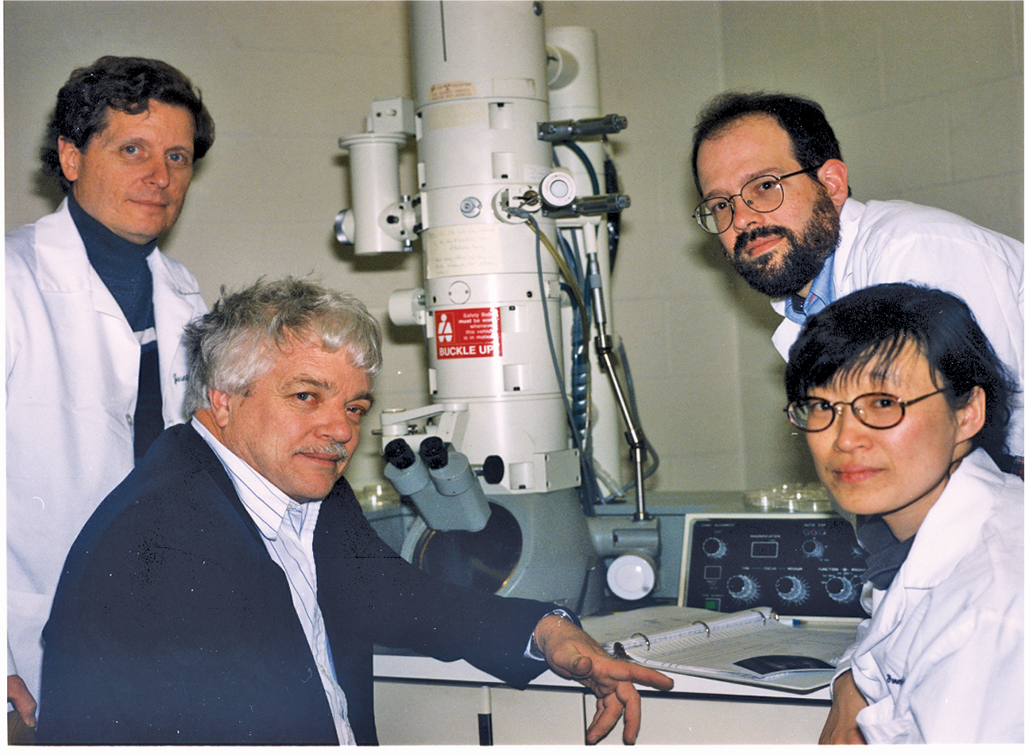
Just a few miles away, John Schiller, a molecular biologist, and David Lowy, a clinician scientist at NCI were exploring how to leverage the intrinsic self-assembling ability of HPV. “By this time, it was ten years since Hausen and his group discovered HPV in 50 to 70 percent of cervical cancers, and there really had been no progress in vaccines,” said Schiller. Neither he nor Lowy had any virology or immunology training, but they were interested in how viruses caused cancer.
To develop an HPV vaccine, they needed to exclude the two genes, E6 and E7, that made the virus carcinogenic. Using VLP would allow them to assemble just the viral shell, which should stimulate an immune response without introducing the full viral genome. With the goal of a vaccine in mind, they infected insect cells, which met regulatory approval for use in clinical trials and could produce proteins at manufacturing levels, with a virus carrying the bovine papillomavirus L1 gene. Using electron microscopy, they observed L1 VLP produced by the cells.
They then eagerly took the crude cell extracts and injected them into rabbits to see if they could elicit an immune response. After diluting rabbit blood samples, they saw high levels of neutralizing antibodies (9). “Nobody sees neutralizing titers of 10,000-fold for any virus in an in vitro assay. We got titers like that, but we didn’t even have any real preparation,” said Schiller.
Yet, when they tried the same experiment using HPV, they got almost no VLP. Perplexed, they repeated the experiment using rhesus macaque papillomavirus and observed clear particles. “Unbeknownst to everybody, the strain that everybody was using, which was originally from Hausen, came from a cancer sample that had a mutation in the L1 gene, so that it almost couldn’t assemble,” said Schiller. He and Lowy cracked the case when they produced HPV L1V LP that elicited high titers of neutralizing antibodies using virus collected from patients with productive infections, not advanced cancer (10).

Each research team needed industry support to make an HPV vaccine a reality, but little had changed in the pharmaceutical landscape since Hausen’s early attempts. “They couldn’t get their heads around the idea that a vaccine for a sexually transmitted infection could produce sterilizing immunity. The reason they said it wouldn’t work is that one had never worked before,” said Schiller. He and Lowy visited biopharmaceutical companies and pitched their discovery to no avail.
Schlegel and Jenson had a similar experience. “Georgetown wasn’t convinced that this was worth patenting, and we had to work hard at it. The way that we got it patented was by finding someone who said, ‘Yeah, we think we should go with it,’” said Schlegel. In 1993, Schlegel and Jenson found success with MedImmune, a small biopharmaceutical company.
MedImmune also licensed Schiller’s and Lowy’s technology in 1997, but their breakthrough came when they met Maurice Hilleman, a leader at Merck who played a pivotal role in developing many modern vaccines, earning him the title of the godfather of modern vaccinology. “He looked at our data — the same data that we showed everybody else — and the pictures of the VLP, and said a few salty words, and then ‘God damn it, this is going to work, and Merck’s going to do it,’” Schiller recalled.
With the financial support and regulatory expertise of the biopharmaceutical industry, progress in developing an HPV vaccine moved at lightning pace. In 2001, both the NCI and MedImmune published data from separate Phase 1 clinical trials demonstrating the safety and immunogenic ability of three doses of their HPV vaccine formulations (11,12). In 2002, the first Phase 2 clinical trial, sponsored by Merck, demonstrated the safety and efficacy of an HPV vaccine (13).

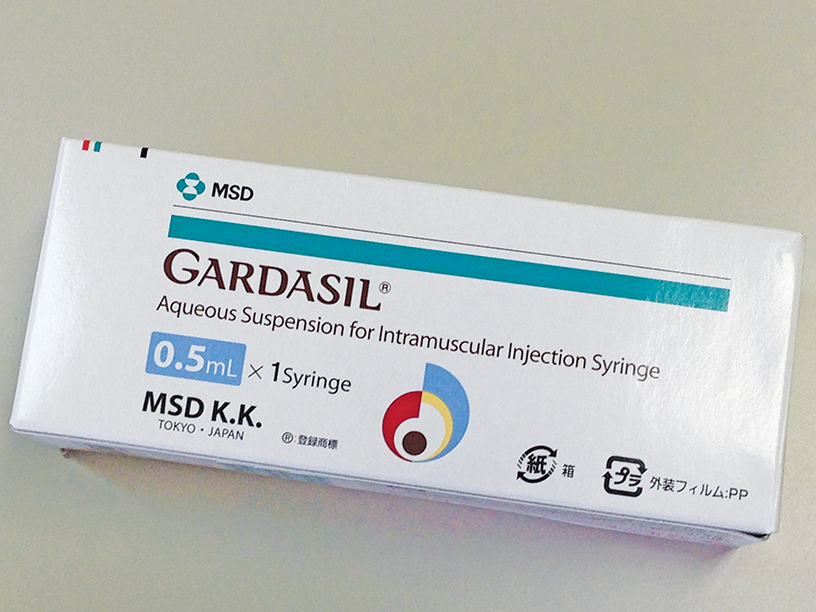
In 2006, the FDA approved Merck’s HPV vaccine (Gardasil®), which protects against four types of HPV and genital warts. MedImmune’s HPV vaccine formulation (CervarixTM), which they sold to GlaxoSmithKline after Phase 1 clinical trials, protects against two common HPV strains that account for 70 percent of cervical cancer cases worldwide. It received FDA approval in 2007.
Both HPV vaccine formulations offer nearly 100 percent protection from HPV-induced cervical, penile, and anal cancers. Since HPV vaccine approval, HPV infections have decreased by 86 percent in female teens and 71 percent in women in their early 20s. “The amazing thing is that this vaccine exceeded all reasonable expectations along the way. It wasn’t because we were so smart. It’s because of biology,” said Schiller. Unlike some vaccines that require booster shots to extend immunity, the HPV vaccine elicits persistent, stable antibodies that offer long lasting protection.
In the initial vaccine trial, researchers chose three doses to maximize the chance of vaccine success because three doses were required for the hepatitis B vaccine. However, Schiller and his team continued to follow participants from their 2001 Phase 1 clinical trial and other trials who received only one HPV vaccine dose. After 16 years, there is still no difference in the antibody levels between these women and those who received three doses.
Reducing the regime to just one dose would lower manufacturing costs and simplify vaccination strategies, making the vaccine more accessible. The NCI is now conducting a clinical trial with Johns Hopkins University formally comparing one HPV vaccine dose to three.
Today, only 15 percent of girls receive the HPV vaccine, and only three percent receive it in low resource settings where 90 percent of cervical cancers occur. “That’s the reason we are working so hard on one dose because that’s the key to impact; that’s going to do more to see fewer girls dying of cervical cancer than anything that we can do,” said Schiller.
This article may be supported by life science companies, but they do not influence the content of the article in any way, and it does not represent an endorsement.